Study on Thermal Imprints — 2024
25 × 35 cm / 20 × 45 cm
Mouth-blown glass, Québec faience — soda-lime glass
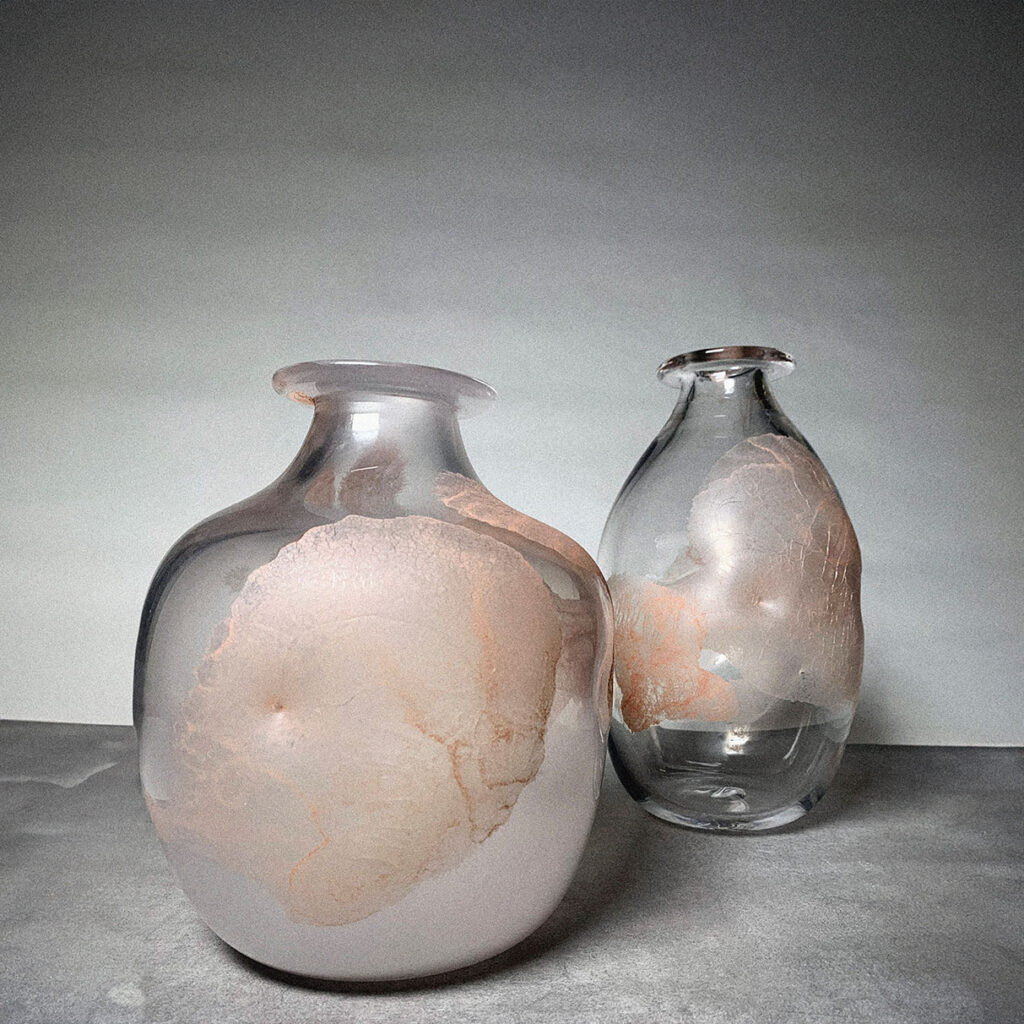
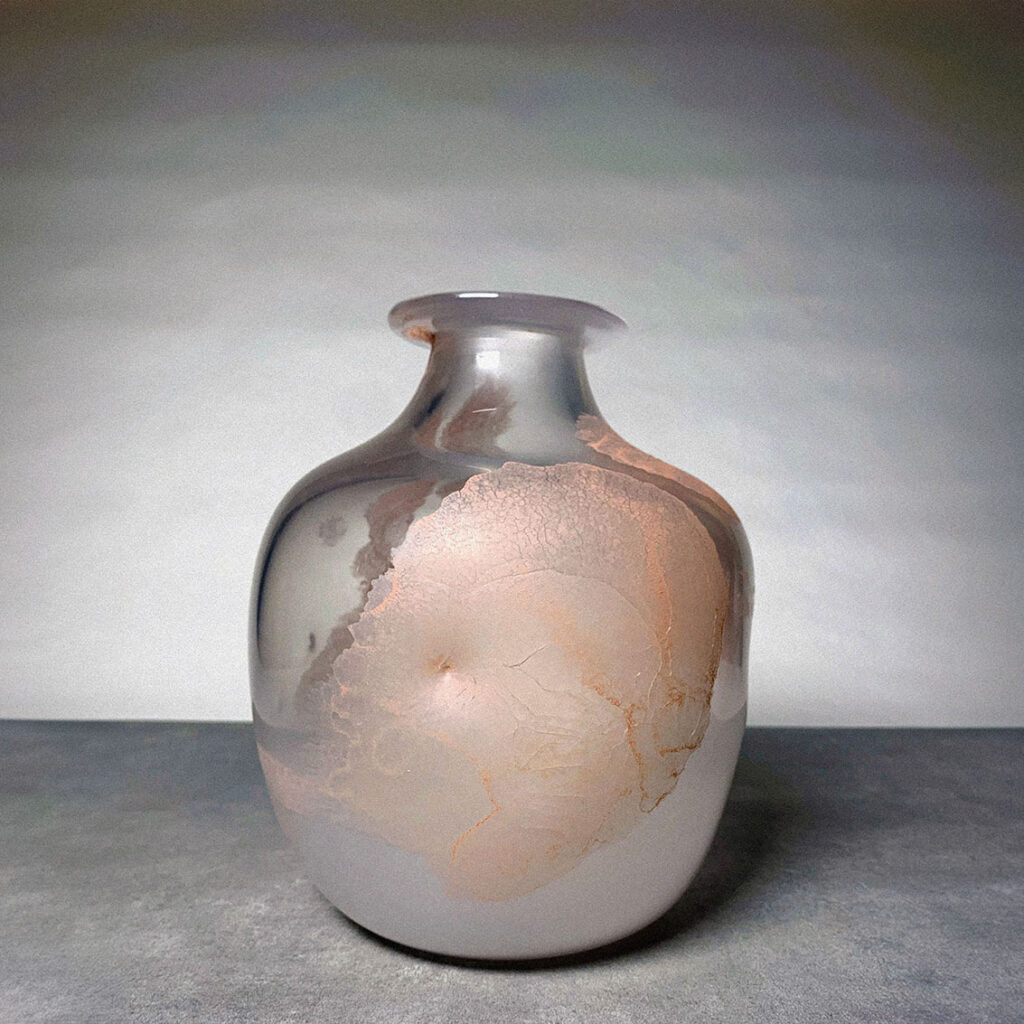
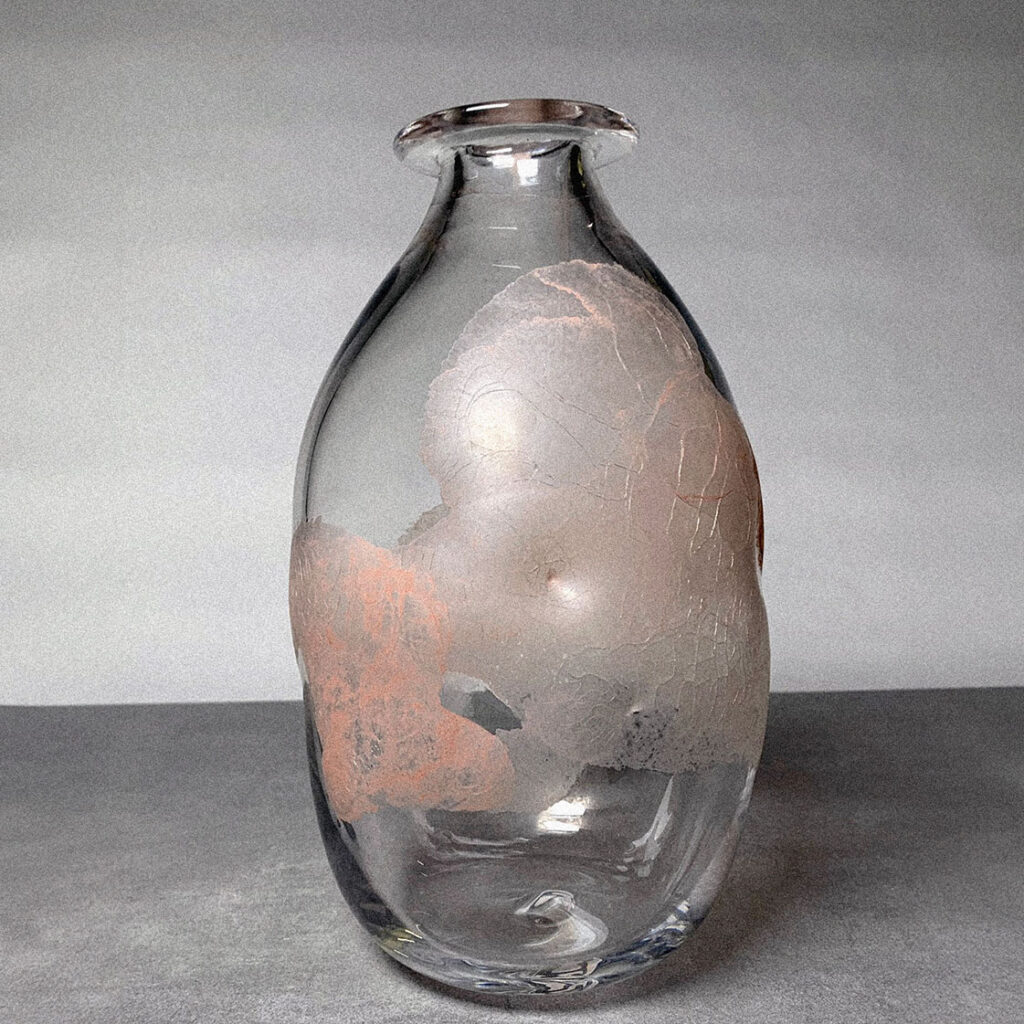
This pair of unique vessels explores the interaction between ceramics and glass, two materials with distinct yet complementary properties. The project investigates what occurs when these mediums intersect within a shared process.
In this work, a ceramic object is diverted from its original function and used as a tool in the glassblowing process. While ceramics allow direct hand shaping, molten glass requires tools to control and manipulate the material. During the blowing process, a liquid faience mixture is applied to the hot glass using the ceramic vessel, creating a thermal shock that allows the ceramic material to fuse to the surface.
This reaction produces organic patterns and textures that become permanently embedded in the glass. The resulting surfaces record a moment where the interaction between materials remains both controlled and unpredictable.
The pieces combine two materials that are not normally compatible, bringing together the transparency of glass and the density of ceramic. They emerge from the meeting of two material traditions, where technical knowledge and experimentation converge.d and the surface treatment is achieved without chemical additives, exploring how simple processes and limited resources can produce nuanced formal results.