Float Glass Surface Studies and Material Compatibility — 2023
Kiln-formed float glass, ceramic pigments, metal oxides, glass frit
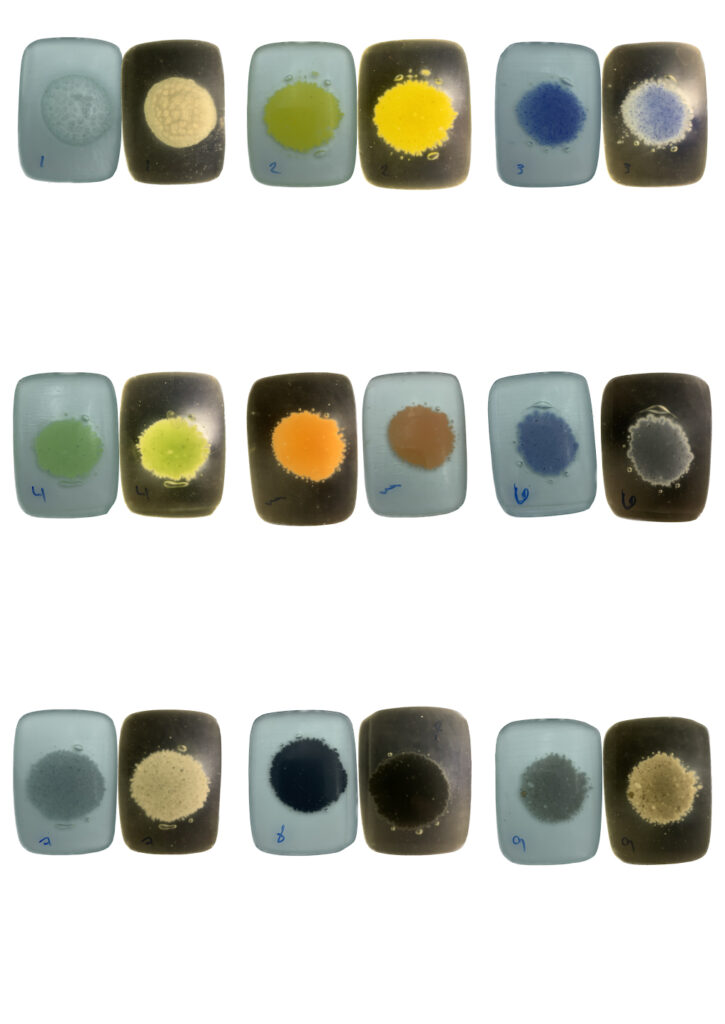
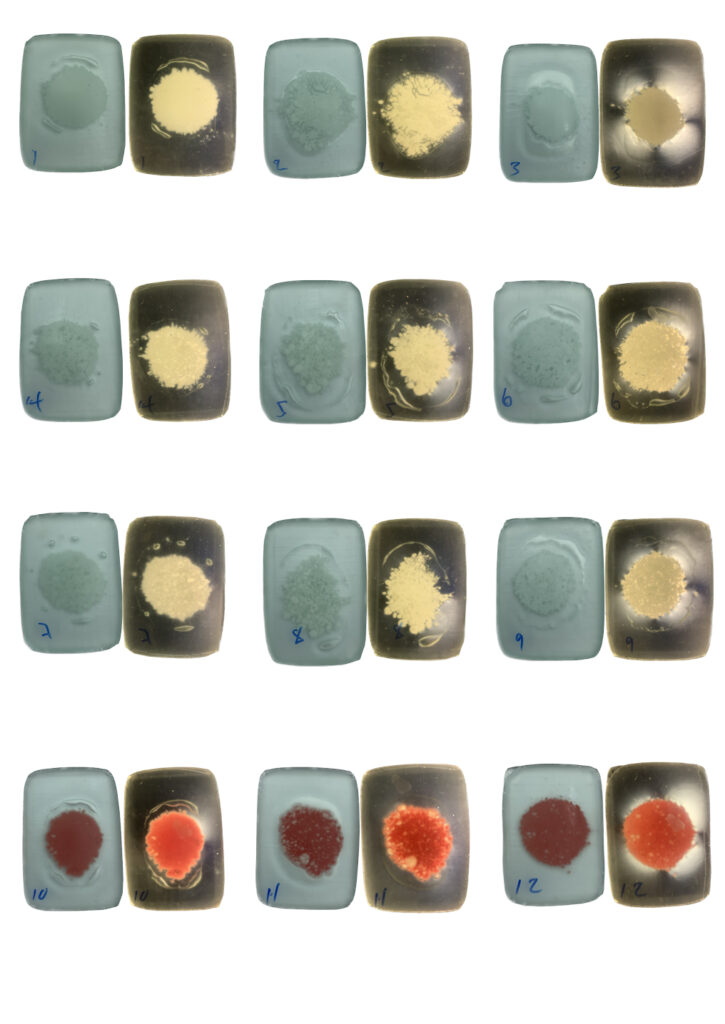
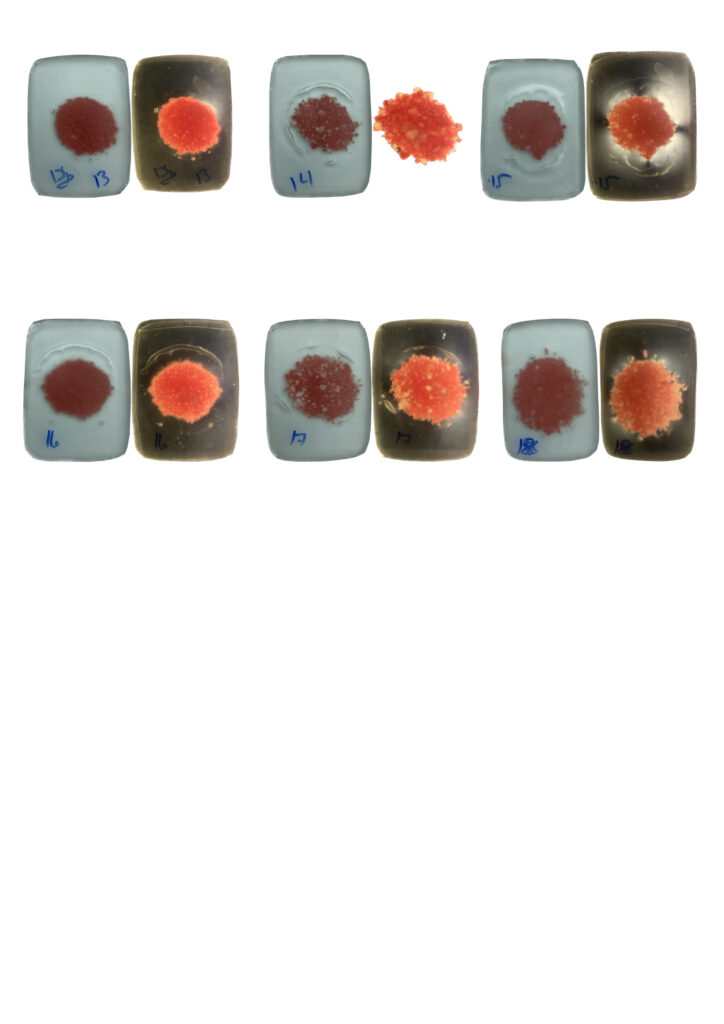
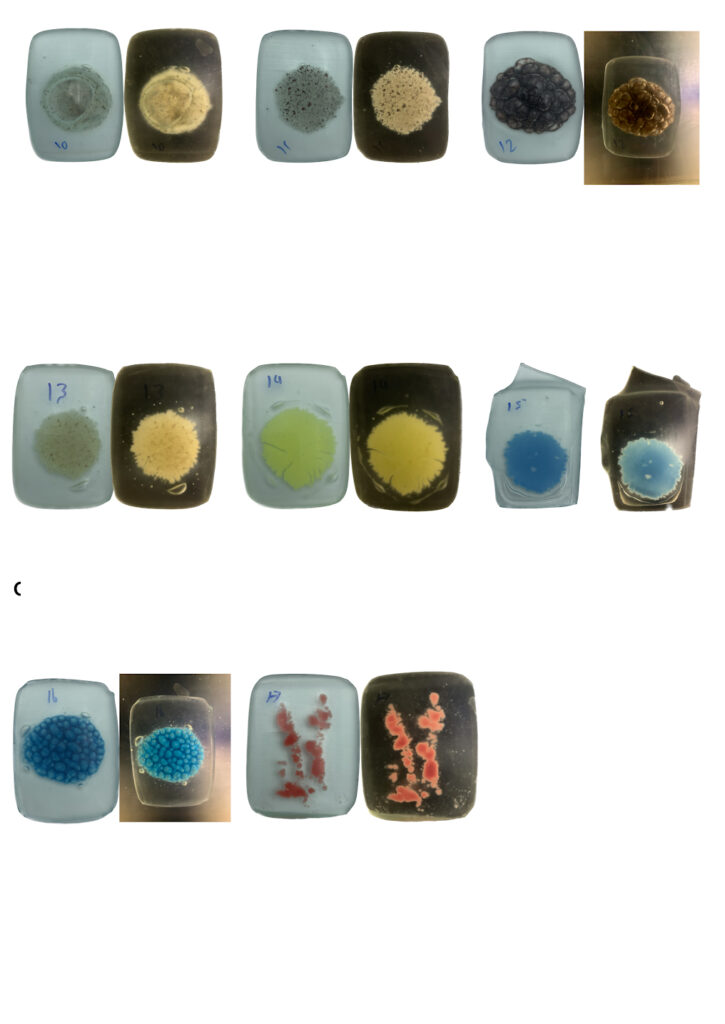
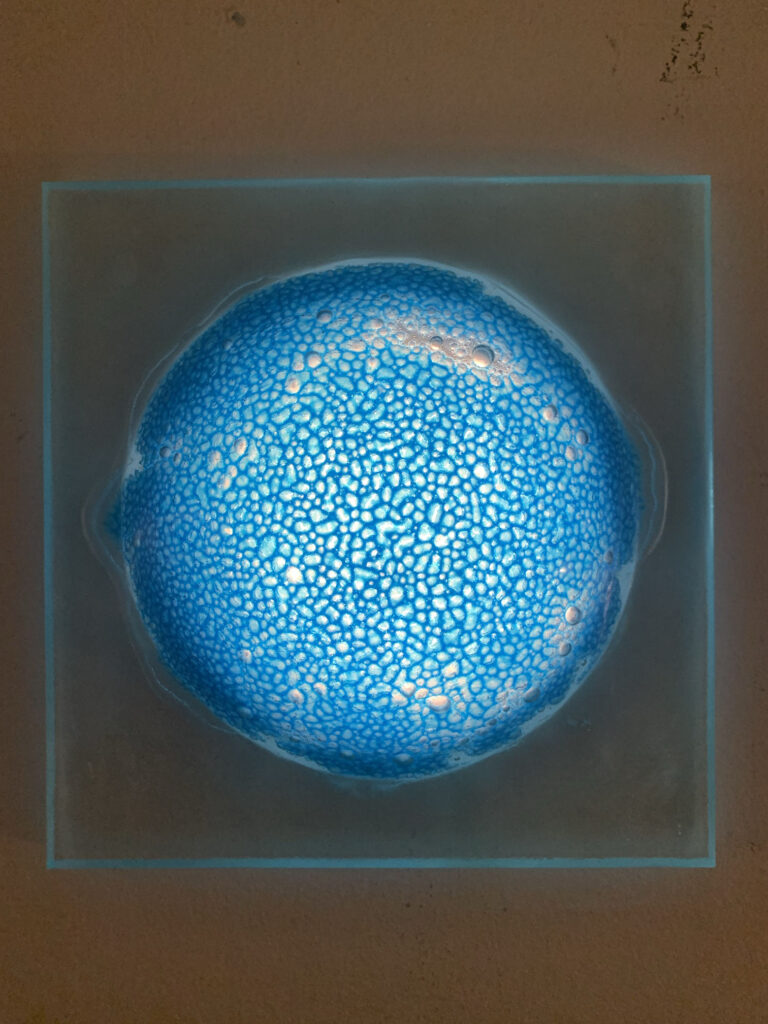
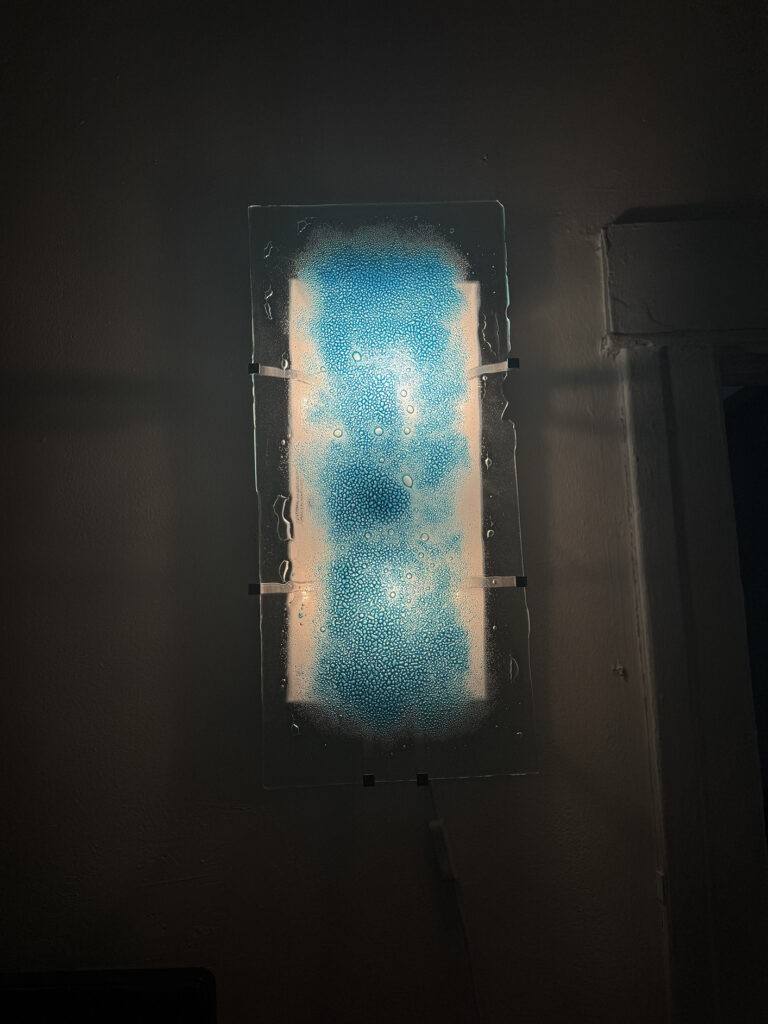
This research project investigates surface treatments and coloration methods for float glass using kiln-forming techniques such as full fusing and screen printing. The work focuses on embedding ceramic pigments, metal oxides and glass frit between layers of glass in order to observe their behavior during firing.
A central aspect of the research concerns the chemical reactions that occur inside the glass during heating. Some materials release gases, expand or react with the surrounding glass, producing bubbles, textures or crystalline formations. Different proportions of each material are systematically tested to evaluate their compatibility with the glass matrix.
Float glass is an industrial material that is widely available but rarely used for coloration in kiln processes. Drawing on knowledge from ceramic materials, the research explores ways of developing pigments that remain compatible with float glass while becoming permanently integrated within the fused surface.
A polariscope is used to reveal internal tensions created during firing. Under polarized light, areas of stress become visible, allowing incompatible materials or unstable reactions to be identified.
Rather than relying on applied glass paints, the objective is to create color directly within the structure of the glass itself. These experiments form a growing library of surface treatments that can later be integrated into functional objects.